
Guide
Reverse osmosis, softening or filtration: which water treatment does your process need?
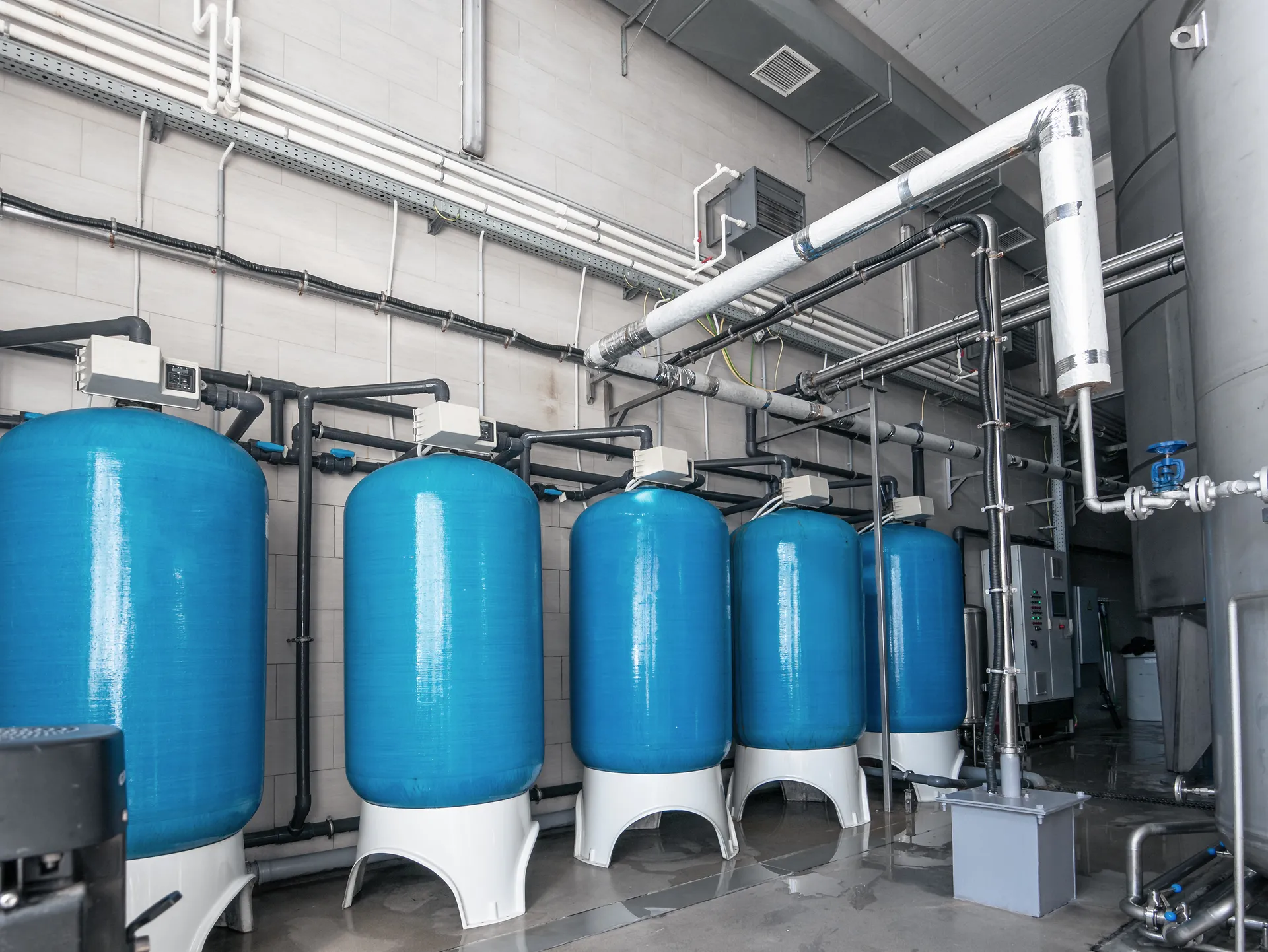
It depends on what is in your water and what your process needs from it. Filtration removes solids. Softening removes hardness — calcium and magnesium — so the water stops scaling. Reverse osmosis removes the dissolved salts as well. Many plants need more than one, decided from a water analysis and a site water balance.
By the Prosep technical team Updated
In short
Filtration, softening and reverse osmosis solve different problems, and the water analysis decides which a site needs. Filtration takes out solids: a self-cleaning Baleen filter, for example, removes material from 10 mm down to 25 micron without chemical assistance. An ion-exchange softener swaps calcium and magnesium for sodium, so the water stops scaling — but its dissolved solids do not fall.
Reverse osmosis pushes water through a semi-permeable membrane that holds back dissolved salts, organics, bacteria and viruses, removing around 98–99.5% of total dissolved solids. When a process needs low-conductivity water — high-pressure boiler feed, pharmaceutical or bottling duty, or a saline borehole source — softening runs out of road and RO takes over. The three are rarely rivals: filtration and softening are often the pre-treatment that protects the RO membranes.
Side by side
What does each treatment remove, and where is it used?
Four technologies, compared on what they take out of the water, the duty they are used for, and where they stop.
| Treatment | What it removes | Typical use | Main limitation |
|---|---|---|---|
| Reverse osmosis | Dissolved salts, inorganic molecules, organics, pyrogens, sub-micron colloids, viruses and bacteria — around 98–99.5% of total dissolved solids. | Low-conductivity or low-TDS duty: high-pressure boiler feed, bottling and food, pharmaceutical and chemical process water, potable supply to SANS 241, saline borehole sources. | Needs correct pre-treatment, antiscalant and membrane care; produces a reject stream that must be designed for; carries its own capital and chemical costs. |
| Softening (ion exchange) | Hardness — calcium and magnesium are exchanged for sodium, so the water stops scaling. | Boiler feedwater, low-hardness process water, and pre-treatment that protects RO membranes. | Does not reduce total dissolved solids, so it cannot deliver low-conductivity water. |
| Media filtration & ultrafiltration | Solids carried in the feedwater, ahead of the stages that follow — the stage is selected for what the feedwater actually carries. | Pre-treatment ahead of RO membranes, and the filtration stage of a process water train. | A sand filter needs backwashing; filtration and softening alone cannot deliver the water RO does. |
| Self-cleaning fine filtration (Baleen) | Floatable, visible and settleable material, high solids loadings, and fats, oils and grease — 10 mm down to 25 micron without chemical assistance, finer with it. | Effluent screening, sewage pre-screening and MBR protection, pre-treatment ahead of RO and nanofiltration, sand filter replacement, and mining recovery. | A screen: anything smaller than the screen aperture passes through. |
Swipe the table sideways to see every column.
When is softening enough?
When the problem is scale and the process does not need low-conductivity water. A softener exchanges calcium and magnesium for sodium, so the water stops scaling. For a boiler, a softener is one of the feedwater options — alongside a dealkaliser or an RO plant — and the first job is to check it suits the boiler behind it.
Where it gets harder is the boiler. Whether softened or RO feed is right depends on raw water quality, boiler pressure, load profile and water cost. RO feed allows higher cycles of concentration and lower blowdown, but carries its own capital and chemical costs. On a boiler water treatment programme, Prosep settles it with a 60-day side-by-side trial — 30 days on soft water, 30 days on RO — recording water consumption, production tonnage, energy use, water analysis and chemical cost. If the numbers do not support the change, you hear that too.
When do you need reverse osmosis?
When the process needs water that filtration and softening alone cannot deliver. That usually means one of these:
- Low-conductivity or low-TDS water, such as high-pressure boiler feed.
- Pharmaceutical or bottling duty, where purity itself is the specification.
- A borehole source with high salinity.
- A municipal bill or supply risk the site wants to take control of.
On that last point, a 4.5 m³/h reverse osmosis plant on borehole feed for a Cosmo City food producer has been running since October 2020, with municipal supply as the backup. Whether RO pays back is proven per site, against the municipal alternative, before you commit.
Where does filtration fit?
Often at the front of the train. Media filtration, softening or ultrafiltration sit in front of RO membranes, selected for what the feedwater actually carries — an RO plant without correct pre-treatment is a membrane-replacement subscription. In a full process water treatment train the order is intake, clarification, filtration, disinfection and storage, engineered to the quality each duty needs.
Where a stream carries high solids loadings or fats, oils and grease, screening matters. Most fine filtration forces a trade-off between fine screening at low flow and high flow with coarse screening, with media that blinds, backwashes or needs replacing. A self-cleaning Baleen filter removes material from 10 mm down to 25 micron at high flow without chemical assistance, and is used for effluent screening, sewage polishing and pre-treatment ahead of RO and nanofiltration.
Can you combine reverse osmosis, softening and filtration?
Yes, and most plants do. The softener and the RO plant are not rivals: on most plants the softener is the pre-treatment that protects the membranes, and filtration — including a Baleen filter — is used as pre-treatment ahead of RO as well. The design question is which stages the water needs: the train is engineered to the quality each duty needs.
How do you decide which your process needs?
- 01
A full water analysis
What the source water — municipal, borehole, river or rain — actually carries.
- 02
The quality each duty needs
RO permeate for a boiler, low-hardness water for a process, potable water where SANS 241 applies.
- 03
A site water balance
The product flow the process needs, the recovery the feedwater allows, and the hours the plant will run.
- 04
The cost against the alternative
Capital, membranes, chemicals, power and reject water against the avoided municipal cost at realistic tariff escalation.
- 05
Proof on your own plant
For a boiler, a 60-day side-by-side trial — 30 days on softened water, 30 days on RO — compared on total operating cost.
Prosep states which your site needs from the water analysis, before you commit. The same discipline is set out on how we work.
Related services
Where each treatment is engineered
Reverse osmosis plants
Design, supply and commissioning — skid, containerised or in-building.
Related serviceProcess water treatment
Softening, filtration, RO and disinfection run as one programme.
Related serviceBoiler water treatment
Softened or RO feedwater, settled with your own production data.
Related serviceBaleen filters
Self-cleaning filtration down to microns, at full flow.
Related serviceFAQ
RO, softening and filtration: questions
Does a water softener reduce total dissolved solids?
No. An ion-exchange softener exchanges hardness — calcium and magnesium — for sodium. The water stops scaling, but its total dissolved solids do not fall. When a process needs low-conductivity or low-TDS water, softening alone cannot get there and reverse osmosis is the right tool.
Does a reverse osmosis plant need pre-treatment?
Yes. Media filtration, softening or ultrafiltration ahead of the membranes, selected for what the feedwater actually carries, plus antiscalant matched to the feedwater analysis. An RO plant without correct pre-treatment is a membrane-replacement subscription.
Should my boiler run on softened water or RO water?
It depends on raw water quality, boiler pressure, load profile and water cost. RO feed allows higher cycles of concentration and lower blowdown, but carries its own capital and chemical costs. Prosep settles the question with a 60-day side-by-side trial on your boiler, comparing total operating cost on each feedwater with your own production data.
Can a Baleen filter replace a sand filter?
Sand filter replacement is one of its listed duties. A sand filter needs backwashing and a static screen blinds over and needs manual cleaning; the Baleen Filter cleans itself as it runs, removing material from 10 mm down to 25 micron without chemical assistance, and finer with it.
Is reverse osmosis worth it against municipal water costs?
Often, but it must be proven per site. The honest comparison includes capital, membranes, chemicals, power and reject water against the avoided municipal cost at realistic tariff escalation. Prosep states this comparison in the programme design before you commit.
Send us your water analysis.
Tell us the water quality and flow your process needs and what your source water looks like. We will state the treatment train, the chemistry and the cost — against the municipal alternative — before you commit.