
Industry focus
Building HVAC water treatment: efficient cooling, controlled Legionella risk
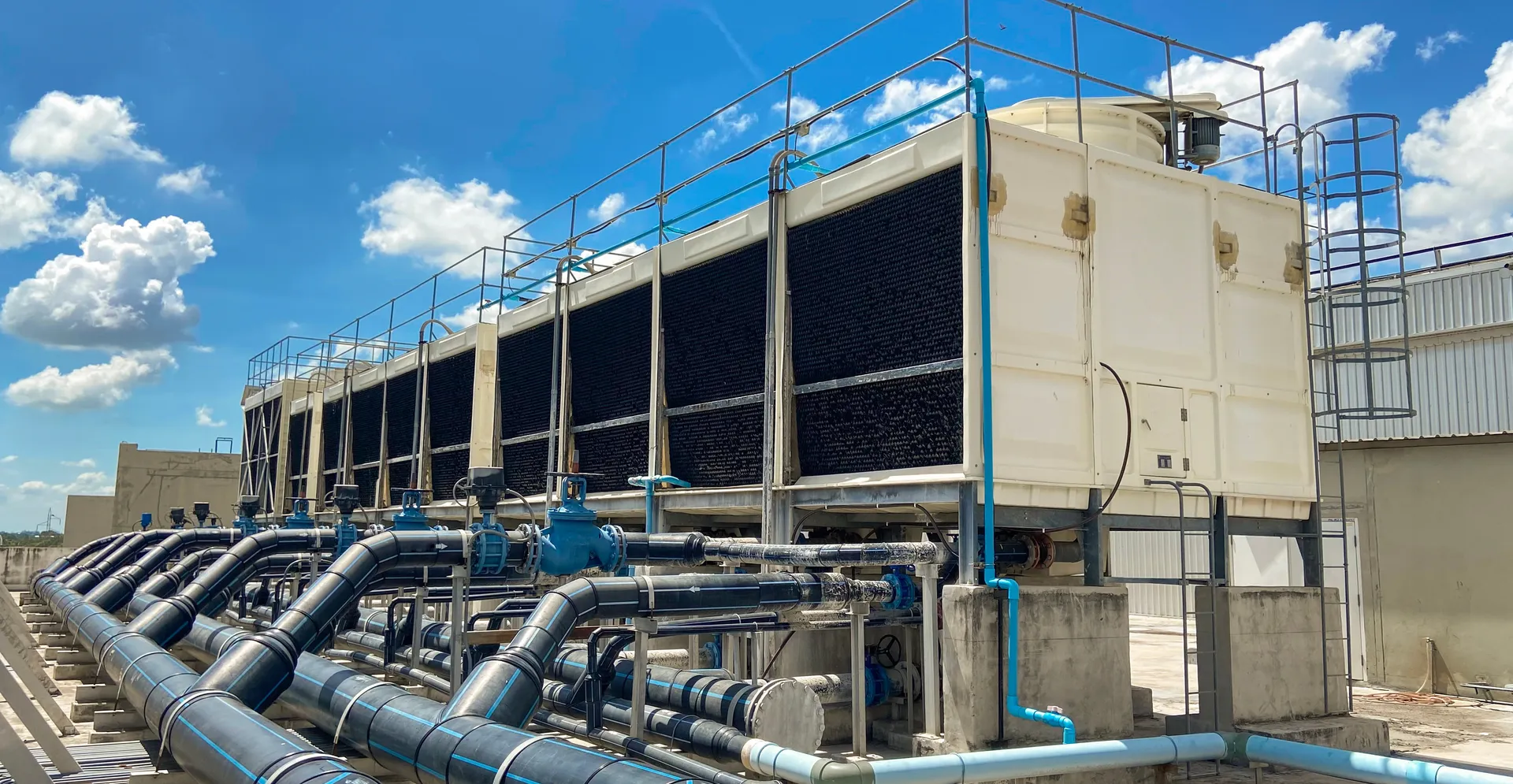
Prosep manages building HVAC water as two linked systems — the closed chilled-water side and the open condenser and cooling tower side — with Legionella control built in.
The HVAC plant that heats and cools a commercial building, hotel or hospital runs on water, and that water is almost always the least-managed system in the building. Facilities teams watch the chillers and the air handling; the chilled-water loops and the condenser water circuits feeding them tend to run untended until something fails. By then the building is paying for it twice: in energy, because fouled heat-transfer surfaces make the plant work harder, and in risk, because warm water and cooling towers are where Legionella grows.
Prosep manages building HVAC water as two linked systems, the closed chilled-water side and the open condenser and cooling tower side, with Legionella control built in, across the kind of commercial, hospitality and healthcare sites where both efficiency and duty of care matter.
Two linked systems
Closed loops, cooling towers and Legionella, managed together
The chilled-water side, the condenser side and the Legionella duty are surveyed as one — because in a building all three sit on the same plant.
The closed chilled-water side
The chilled-water and heating loops look sealed, so they get ignored — yet they corrode from the inside as make-up water brings in oxygen and hardness and inhibitor depletes. Our closed-loop and cooling tower management programme holds the inhibitor reserve and controls microbial activity, monitored rather than assumed.
The condenser water and cooling tower side
The cooling towers and condenser circuits scale, corrode and foul like any open system, and every bit of scale makes the chiller work harder. Our cooling water treatment programmes control scale against a measured saturation index, manage corrosion and fouling, and push cycles of concentration as high as the chemistry safely allows.
Legionella is a duty, not an option
In a hotel, hospital or public building, cooling towers generate aerosol and the duty under the OHS Act is real. Our Legionella control programme works to the principles of SANS 893 — a risk assessment, a written control scheme, a designed biocide programme, routine monitoring and the records an inspection or insurer expects.
The everyday payback
Efficiency is the everyday payback
The risk case is the headline, but the efficiency case is the one that pays every month. Clean heat-transfer surfaces, on both the chiller side and the condenser side, mean the plant reaches the required temperatures with less energy. Fouling is an energy cost the building pays continuously until the chemistry is brought under control.
The programmes
What protects the systems
Standards we work to
For a hotel, hospital or public building the documentation is not bureaucracy; it is the evidence that the duty was met. Our engineers sample, dose, monitor, report, and come back — the routine described on how we work.
- SANS 893 — Legionella control (principles)
- OHS Act — employer duty
FAQ
Building HVAC water treatment questions
Our building's chilled-water loop is sealed. Why would it need treatment?
Because it is not truly sealed. Make-up water brings in oxygen and hardness, inhibitor depletes over time, and corrosion product circulates to foul coils and seize valves. A maintained, monitored inhibitor programme prevents a slow internal failure in a system that is meant to last for decades.
Are we legally required to control Legionella in our cooling towers?
Building operators carry duties under the OHS Act to control health risks to occupants and the public, and SANS 893 sets out how Legionella risk in cooling and water systems should be assessed, monitored and controlled. In hotels, hospitals and public buildings the exposed population makes this duty acute, and the programme produces the records that demonstrate it was met.
How does water treatment reduce our HVAC energy cost?
Through clean heat-transfer surfaces. Scale and fouling on chiller and condenser surfaces force the plant to work harder for the same cooling, an energy cost the building pays continuously. Controlling scale, corrosion and fouling lets the plant reach temperature with less energy, which is the everyday payback alongside the risk reduction.
Can you manage the whole building's HVAC water under one programme?
Yes. The closed chilled-water loops and the open condenser and cooling tower circuits are surveyed together, each gets the chemistry it needs, Legionella control is built in, and the whole system is monitored and reported by one team, so nothing falls between separate suppliers.
Your chilled-water loops, cooling towers or Legionella duty.
Tell us what you run. We survey the closed and open systems together, give each the chemistry it needs, build Legionella control in, and monitor and report so the gains hold.