
Industry focus
Power generation water treatment: chemistry is availability
In power generation, water chemistry is an availability number. We treat feedwater, condensers and cooling water against stated targets, with on-site monitoring that catches the drift before it becomes the outage.
In power generation, water chemistry is not a maintenance topic — it is an availability number. Steam-side deposits and carryover attack the most expensive metal on site. Condenser fouling shows up directly as backpressure and lost megawatts. Cooling water excursions turn into forced outages with costs that dwarf any treatment budget.
Prosep treats power and energy clients with the method we apply across more than 300 sites nationally: assess the circuit, design the programme against stated targets, implement it, then monitor on site with written reporting. Our team includes engineers with four decades in process chemistry, filtration and water treatment, including regional responsibility for industrial filtration across Southeast Asia.
What we bring
The water side of availability
Steam, condensers and the site's own discharge — treated as one accountable engagement.
Steam & feedwater
Feedwater quality, where reverse osmosis and polishing define what enters the cycle; internal boiler chemistry dosed to measured residuals; and blowdown control that holds dissolved solids at target, not at habit.
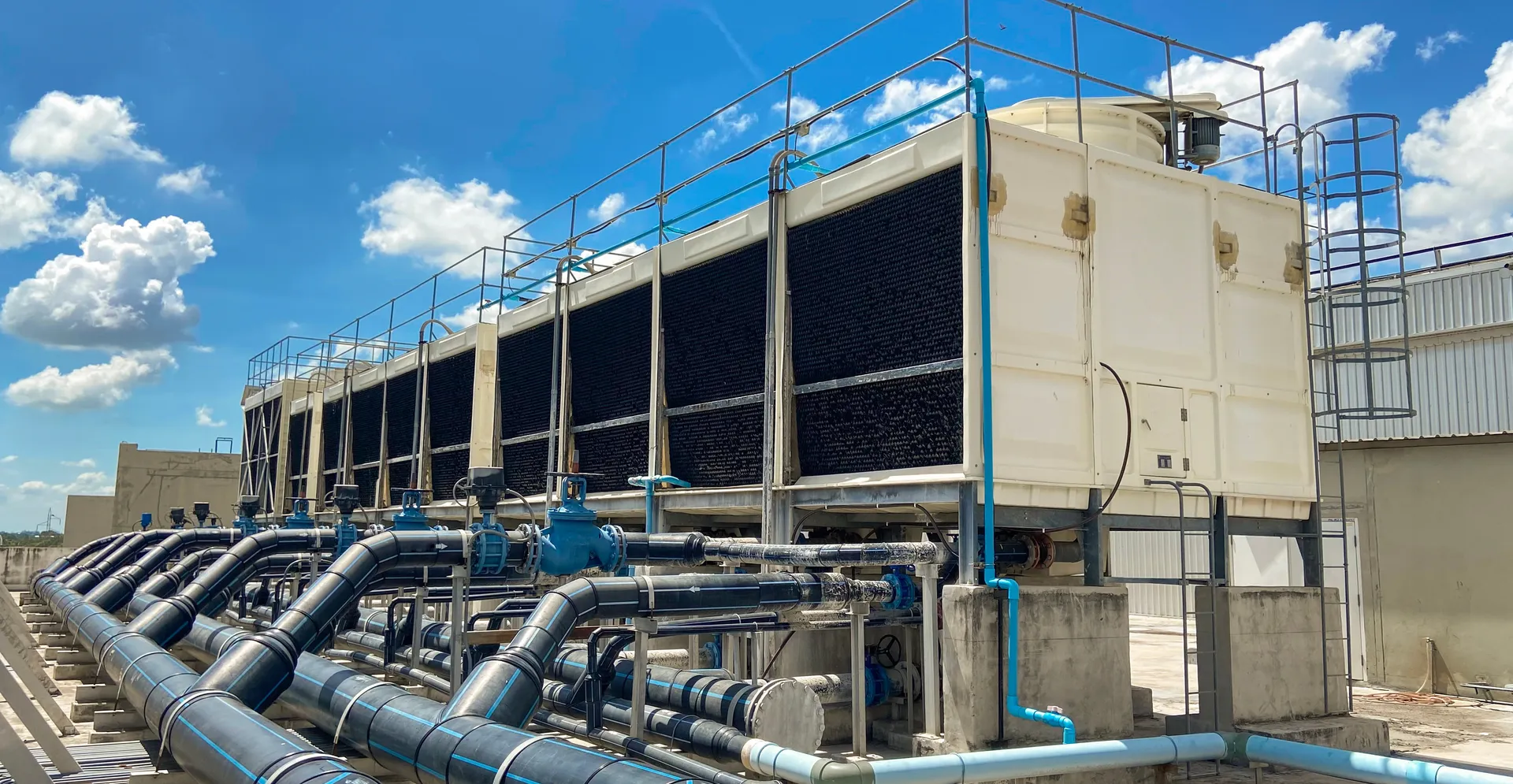
Condensers & cooling water
Scale and biofilm on condenser tubes raise approach temperature and backpressure. We hold the saturation index and microbiological limits, with corrosion inhibition matched to the metallurgy and a biocide programme with kill data behind it.
Effluent & water balance
Blowdown, demineralisation regeneration waste and site runoff designed against DWS requirements — with reuse where the water balance supports it, and EPSE heavy-metals capability where metals are the constraint.
Outage prevention by design
The routine is the outage prevention
The honest claim is not that treatment prevents all failures. It is that a programme with stated targets, on-site monitoring and written trend reporting catches the drift before it becomes the event — the slow rise in an approach temperature, the residual that stopped holding, the cycle count that crept past the saturation limit. Our engineers do not drop off drums and disappear. They sample, dose, monitor, report, and come back.
The programmes
What a generation site runs on
Each circuit engineered against stated targets, monitored on site. The method is on how we work.
Boiler water treatment
Feedwater, internal chemistry and blowdown — proven on your own plant.
View serviceCooling water treatment
Condenser and cooling-circuit scale, corrosion and Legionella control.
View serviceEffluent treatment
Blowdown, regeneration waste and runoff to DWS limits, with reuse.
View serviceLegionella control
SANS 893 risk control on large cooling systems.
View serviceStandards we work to
Legionella risk in cooling systems is managed working to the principles of SANS 893, with the documentation an OHS Act inspection expects. Generation sites carry their own discharge obligations under DWS requirements, engineered in as part of the same engagement. And where heat-transfer surfaces have already scaled, a controlled boiler acid clean resets them before the chemistry takes over.
- SANS 893 — Legionella
- OHS Act
- DWS discharge requirements
FAQ
Power generation water questions
How does cooling water treatment affect generation output?
Through the condenser. Scale and biofilm on condenser tubes raise approach temperature and turbine backpressure, which costs output directly. A programme that holds the saturation index and microbiological limits keeps the condenser at design performance between planned cleans.
What does steam purity depend on?
Feedwater quality first, then boiler internal chemistry and carryover control. The programme has to cover all three; treating the boiler while ignoring the feedwater plant is how steam purity problems persist.
Can you work alongside our own plant chemists?
Yes. Many generation clients have in-house chemistry capability; Prosep's role is then the programme design, chemical supply, dosing equipment and an independent monitoring and reporting layer with accountability attached.
Do you treat the site's effluent streams as well?
Yes. Blowdown, regeneration waste and other site streams are designed against DWS discharge requirements as part of the same engagement, with reuse engineered where the water balance supports it.
Talk to us about a specific circuit.
Feedwater, condenser, cooling or blowdown — we assess it, set the targets, and run the monitoring that catches the drift before it costs you megawatts.