
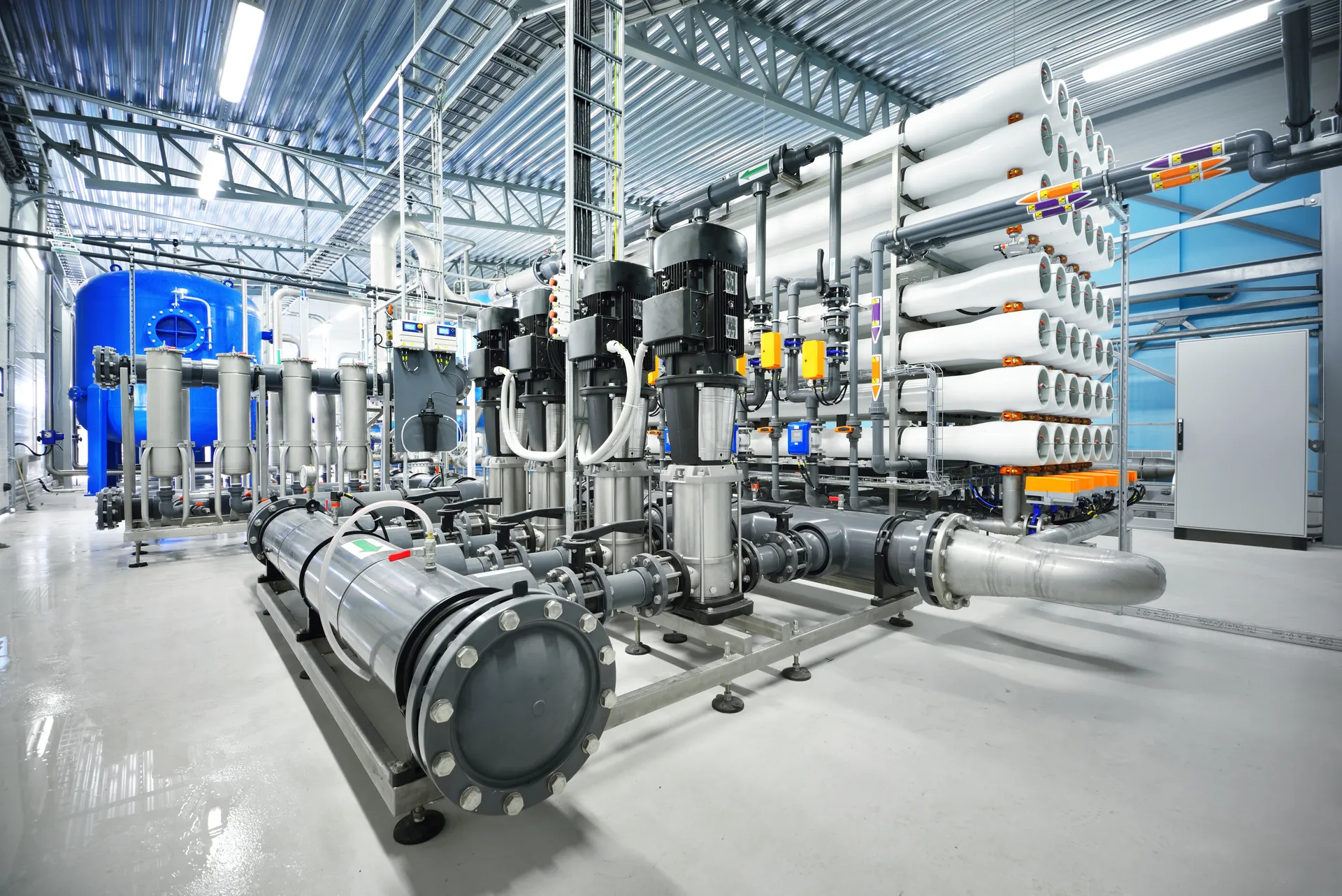
Reverse osmosis plant hall with pumps and membrane racks

Process & production yield

Process water treatment: the right water, made on your site, at a defensible cost

The right water for your process, made on site from whatever source you have — reverse osmosis, softening and alternative supply, at a cost we state against the municipal alternative.

Municipal water in South Africa is getting more expensive and less dependable at the same time. For a production site that is a process risk, not just a line item. Process water treatment is how a plant takes control of both — making the water the process actually needs, from whatever source is available, at a cost the business can defend.

Prosep designs, installs and runs process water programmes across South Africa: reverse osmosis plants and the chemicals that keep them alive, softening, filtration, and alternative supply schemes that reduce dependence on the municipal connection. We currently treat more than 132 million litres a day across the sites under our care.

The programme

What a Prosep process water programme covers

Plant, chemicals, dosing and commissioning from one accountable supplier — then monitoring and optimisation.

01

Reverse osmosis plants

Design, installation and commissioning of RO systems sized to the duty — from skid-mounted plants of a few kilolitres an hour to larger industrial trains — with the pretreatment the feedwater demands. An RO plant without correct pretreatment is a membrane-replacement subscription.

02

RO chemicals & membrane care

Antiscalant matched to the feedwater analysis, CIP cleaning chemicals, and biocide regimes where biofouling is the risk. Membrane performance is monitored, normalised and reported, so a fouling trend is caught as chemistry before it becomes capital.

03

Softening & filtration

Ion-exchange softeners, media filtration and ultrafiltration where the duty calls for them, supplied and maintained as part of the programme.

04

Alternative & supplementary supply

Rainwater harvesting, borehole treatment and effluent reuse that cut the municipal draw — designed as one water balance with your discharge side.

The train

Source to point of use

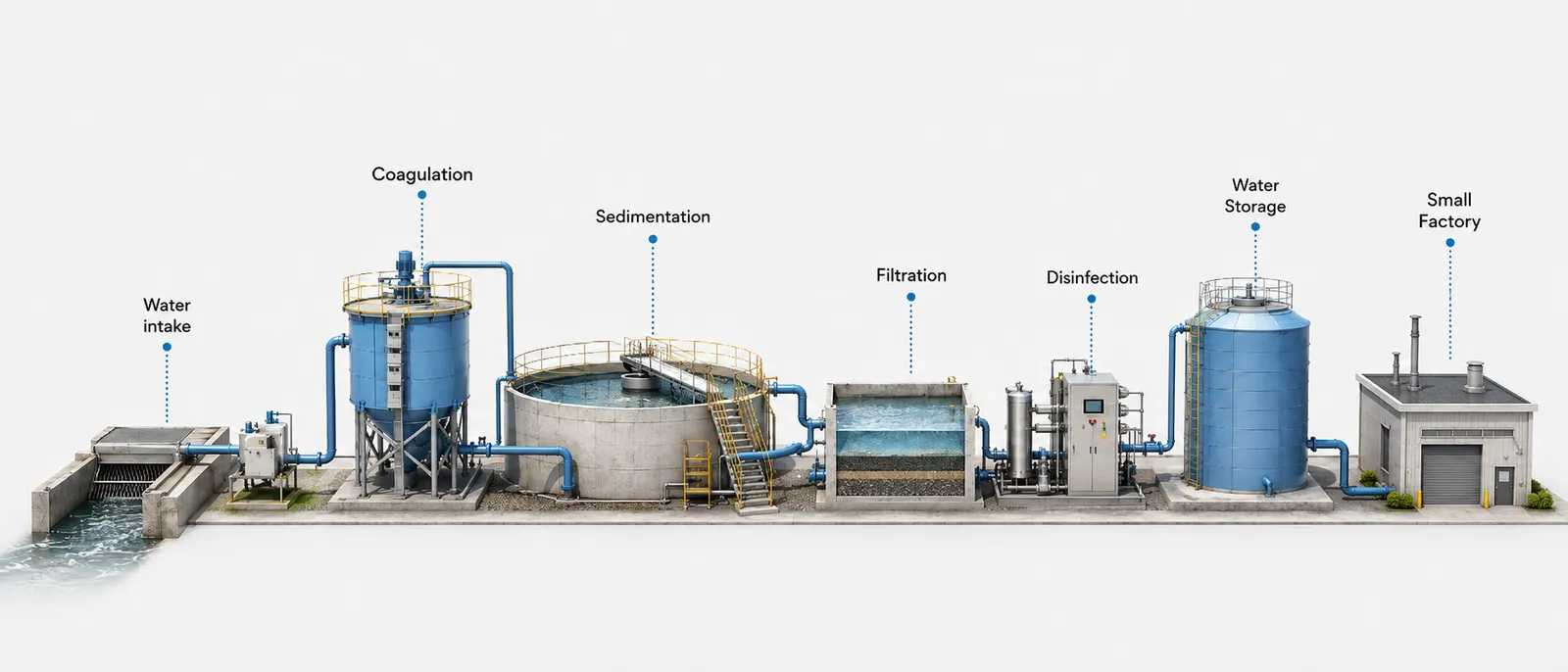
Every kilolitre accounted for. We start with a full water analysis and a water balance, then design the train to the quality each duty needs — costed against the municipal alternative before you commit.

Process water treatment train: intake, coagulation, sedimentation, filtration, disinfection and storage feeding a production facility
Intake, clarification, filtration, disinfection and storage — engineered to the quality each duty actually needs.

Proof

Operational today, on real sites

Two ways we cut the municipal draw for food and beverage clients — both still running.

Process water — reverse osmosis

Food producer, Cosmo City

Problem
Rising municipal water consumption costs.
Programme
A 4.5 m³/h reverse osmosis system on borehole feed, engineered and installed by Prosep, commissioned October 2020.
Result
Operational for over five years. Municipal water cut to a backup role used mainly during planned Rand Water shutdowns. In a reference month, around 1,140 kl of treated water produced against 239 kl of municipal top-up.

Alternative supply — rainwater harvesting

Beverage producer, Heidelberg

Problem
Municipal water consumption costs.
Programme
Four 10 m³ rainwater storage tanks installed across the site's harvesting stations with filtration, commissioned December 2023, designed to capture in the order of 2,600 m³ of rainwater a year from roughly 3,000 m² of roof.
Result
Operational; the client has since added further storage of its own, extending the scheme.

Who this is for

Any site where water is a production issue

Sharpest in food and beverage, where water is an ingredient, and across water-intensive process industries.

Standards we work to

Where treated water must be potable, programmes are designed against SANS 241. Where the source or the reject stream touches a discharge point, DWS requirements apply and are engineered in from the start — designed as one water balance with our effluent treatment team. Upfront coagulation and clarification removes solids before they reach the membranes, dosing and monitoring equipment holds each setpoint, and the same treated water feeds hygienic Clean-in-Place systems downstream.

  • SANS 241 — potable water
  • DWS discharge requirements

FAQ

Process water & RO questions

Is a reverse osmosis plant worth it against municipal water costs in South Africa?

Often, but it must be proven per site. The honest comparison includes capital, membranes, chemicals, power and reject water against the avoided municipal cost at realistic tariff escalation. Prosep states this comparison in the programme design before you commit, and has installed RO systems for exactly this reason, including a 4.5 m³/h plant for a Cosmo City food producer running since October 2020.

What chemicals does an RO plant need?

Antiscalant dosed against the feedwater analysis to stop sparingly soluble salts fouling the membranes, periodic cleaning chemicals for CIP, and in some systems a biocide regime against biofouling. The selection and dose rate follow the water, not a price list.

How long do RO membranes last?

It depends almost entirely on pretreatment and chemical care. With correct pretreatment, a matched antiscalant programme and monitored, normalised performance data, membranes reach their design life. Without those, replacement becomes a recurring cost. Prosep's programmes exist to keep sites on the first path.

Can you reduce our dependence on municipal water without a full RO plant?

Frequently. Rainwater harvesting, borehole treatment and effluent reuse all reduce the municipal draw, and we have implemented these as standalone schemes, including rainwater harvesting storage for a Heidelberg beverage producer designed to capture around 2,600 m³ a year and since extended by the client. The right answer comes out of the site water balance.

Do you maintain plants you did not install?

Yes. We assess the existing plant, put a chemical and monitoring programme around it, and take accountability for its performance going forward.

Start with a water balance.

Tell us your sources, your process-water targets and your municipal bill. We will map where every kilolitre goes and state the capital and operating cost against the municipal alternative.