
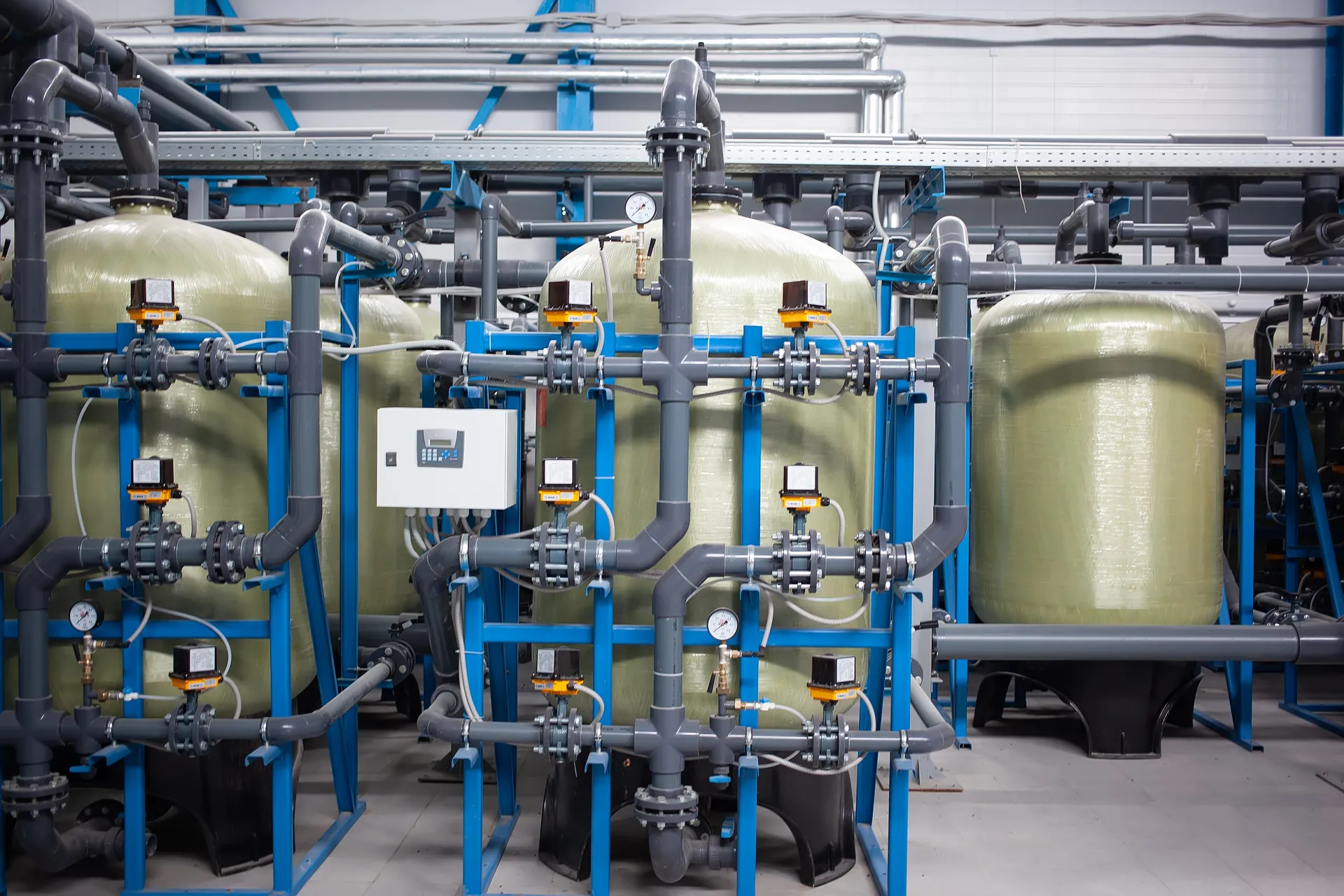
Stainless steel filtration and process water lines in a plant

Industry focus

Food and beverage water treatment: protect the product, cut the water bill

Water is an ingredient, a cleaning agent and a brand risk on one site. SANS 241 potable water, clean steam, CIP and effluent reuse — engineered as one programme, with the records to prove it.

In food and beverage, water is not a utility — it is an ingredient, a cleaning agent and a brand risk all at once. The water that touches product must meet SANS 241. The steam that touches process must be clean. The CIP system must actually sanitise. And the site's biggest cost pressures — municipal tariffs and effluent charges — are both water numbers.

No other sector has this many water problems on one site, which is why it is the sector where a single accountable treatment partner earns its keep fastest. Prosep runs process water treatment and full-site water programmes across South African food and beverage plants as part of more than 300 sites served nationally.

What we bring

Every water touchpoint on the plant

From the water in the product to the effluent leaving site — one accountable team across all of it.

01

Potable & product water

Where water touches product or people, SANS 241 is the reference — source treatment, disinfection, and the monitoring records that prove compliance the day an auditor or a retail customer's technical team asks.

02

Steam & boiler water

Cooking, sterilising and CIP heating — feedwater, internal chemistry and blowdown control, with RO feedwater proven on a side-by-side trial before you commit.

03

Cooling & refrigeration

Condenser circuits and cooling towers carry the refrigeration load — and a Legionella risk the sector can't afford. Managed to the principles of SANS 893.

04

CIP & disinfection

Clean-in-place performance is water chemistry: hardness affects detergent performance, and disinfection must match the soil, the materials and the contact time the plant can actually give it.

05

Effluent reuse

Expensive to discharge, valuable to reuse. At a Randvaal food producer we recycle around 907 kl a month of treated effluent for domestic reuse — water paid for once, used twice.

Proof

Three food & beverage clients, all operational

Three ways we cut the municipal draw — reverse osmosis, rainwater harvesting and effluent reuse — each still running today.

Process water — reverse osmosis

Food producer, Cosmo City

Problem
Rising municipal water consumption costs.
Programme
A 4.5 m³/h reverse osmosis system on borehole feed, engineered and installed by Prosep, commissioned October 2020.
Result
Operational for over five years. Municipal water cut to a backup role used mainly during planned Rand Water shutdowns. In a reference month, around 1,140 kl of treated water produced against 239 kl of municipal top-up.

Alternative supply — rainwater harvesting

Beverage producer, Heidelberg

Problem
Municipal water consumption costs.
Programme
Four 10 m³ rainwater storage tanks installed across the site's harvesting stations with filtration, commissioned December 2023, designed to capture in the order of 2,600 m³ of rainwater a year from roughly 3,000 m² of roof.
Result
Operational; the client has since added further storage of its own, extending the scheme.

Effluent reuse

Food producer, Randvaal

Problem
Municipal water consumption costs and effluent leaving site as pure cost.
Programme
Treated effluent recycled for domestic reuse on site (toilet flushing), commissioned February 2022.
Result
Around 907 kl of effluent recycled per month. Operational for over four years. Water paid for once, used twice.

Brand protection, stated plainly

A water failure here is not a maintenance event

It is a product recall, a retailer delisting, or a name in the news. The defence is not heroics, it is routine: programmes with stated targets, engineers who sample, dose, monitor, report, and come back, and records that prove the plant was in control.

The programmes

One supplier, the whole water circuit

Potable water, steam, cooling, CIP and effluent — engineered programmes priced against scope.

Standards we work to

Where water touches product, SANS 241 governs and the monitoring records matter as much as the water itself. Cooling-system Legionella risk is managed to the principles of SANS 893 under the OHS Act, and effluent against DWS discharge requirements. Behind those records sits the dosing and monitoring equipment that holds each setpoint, with flocculation and clarification carrying the solids load at the front of the effluent plant — and where a site treats its own domestic sewage, a packaged sewage plant completes the water circuit. The same food-safety discipline runs through poultry and agriculture processing.

  • SANS 241 — potable water
  • SANS 893 — Legionella
  • OHS Act
  • DWS discharge requirements

FAQ

Food & beverage water questions

How do we reduce municipal water costs at a food plant?

Start with a water balance, then attack the biggest draws. Prosep has done this three ways for food and beverage clients: a 4.5 m³/h reverse osmosis plant for a Cosmo City food producer (2020), rainwater harvesting storage for a Heidelberg beverage producer (2023), and recycling of around 907 kl a month of treated effluent for domestic reuse at a Randvaal food producer (2022). All three remain operational.

Does treated water for production have to meet SANS 241?

Where water touches product or is used for potable purposes, SANS 241 is the governing standard, and the monitoring records matter as much as the water quality itself. Prosep designs programmes against the standard and builds the proof into the routine reporting.

Can recycled effluent really be used inside a food plant?

For appropriate duties, yes. At a Randvaal food producer we engineered treated effluent recycling for domestic reuse, around 907 kl a month, flushing toilets on site. The duty defines the required quality; the treatment is designed to meet it, with monitoring to prove it holds.

How is Legionella risk handled in our cooling systems?

Through a managed programme working to the principles of SANS 893: risk assessment, a designed biocide regime, routine microbiological monitoring and documented records, with the paper trail an OHS Act inspection or insurer audit expects.

Can one supplier cover potable water, steam, cooling, CIP and effluent?

That is Prosep's model: treatment chemicals, dosing equipment and on-site engineering sold as engineered programmes across the whole site water circuit, priced transparently against scope, from one accountable team.

Talk to us about your site's water balance.

Potable water, steam, cooling, CIP and effluent — one accountable team, programmes priced against scope, with the records that protect the brand.