
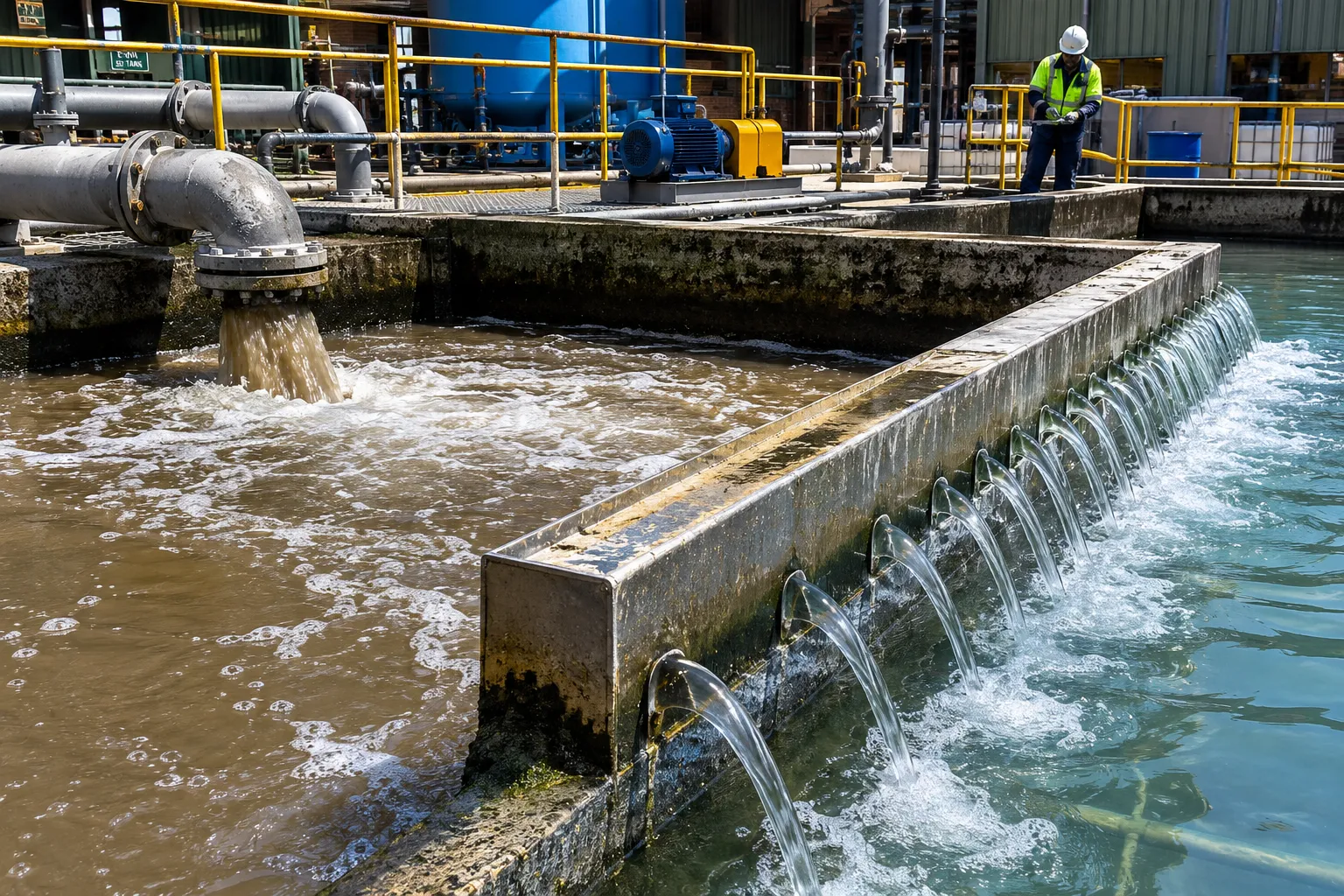
Clarified treated water being returned into a plant process line from a recovery stage

Compliance & sustainability

Water reuse and recovery: use the water twice, discharge less

Treating a site's own effluent and process streams back to a quality that matches a real reuse duty — reducing the freshwater draw and the discharge volume, and reaching zero discharge where the chemistry allows.

Most plants buy water once, use it once, and pay to get rid of it. That model is getting more expensive at both ends: municipal tariffs climb, abstraction gets harder, and effluent disposal carries its own rising cost and its own discharge limit. Water reuse breaks the model. Treated correctly, the water a plant was about to discharge becomes water it does not have to buy, and in the best cases the discharge stops altogether.

Prosep engineers water reuse and recovery as a designed outcome, not an aspiration: treating a site's own effluent and process streams back to a quality that matches a real reuse duty, reducing the freshwater draw and the discharge volume, and reaching zero discharge where the water balance and the chemistry allow.

The programme

What a Prosep reuse programme covers

From treating a reject stream to its reuse standard through to engineering a plant toward zero discharge — each recovered stream matched to a duty it can meet.

01

Treating effluent to a reuse standard

The reject stream is characterised and treated to the quality the intended reuse needs — no more, no less. Coagulation, flocculation and clarification remove solids and load; where dissolved metals are the constraint, Prosep is the appointed South African implementer and distributor of EPSE chemistry, which removes base metals, hazardous metals, radioactive elements and rare earths.

02

Polishing to the duty

Recovered water often needs a final step. Our process water treatment capability provides the filtration, reverse osmosis and conditioning that take a treated stream up to the quality the duty requires — cooling make-up, process water, or a potable-adjacent use worked to SANS 241.

03

Matching water to duty

Not every reuse needs drinking-quality water. The engineering value is in matching each recovered stream to a duty whose quality it can meet, so the treatment cost is no higher than the duty justifies. Toilet flushing, cooling tower make-up, washdown and irrigation all accept water that would not pass as potable.

04

Engineering toward zero discharge

Where the water balance supports it, the end state is a plant that recycles its water and discharges nothing. That is an engineered result, designed against the streams and proven in operation — not a slogan.

Proof

The proof already exists

Two of Prosep's existing programmes show the shape of the result. A South African steel pipe coating plant treating a difficult metals-laden effluent now runs on fully recycled water with zero discharge, with overall heavy metal reduction above 99.9%. And a Randvaal food producer recycles treated effluent for domestic reuse on site, around 907 kilolitres a month, flushing toilets with water it previously paid to dispose of. Different industries, same principle: water paid for once, used twice.

Effluent & heavy metals removal

Steel pipe coating plant

Problem
Acid pickling effluent, very low pH, high chlorides, dissolved iron, zinc and lead. Lime-only treatment left iron high, limited water reuse, generated heavy sludge, and forced a full plant clean every three months, draining 10 to 20 cubic metres each time.
Programme
EPSE chemistry verified at laboratory scale in Finland (November 2024) before full-scale implementation (June 2025). Daily on-site sampling run in parallel against lime-only treatment. pH control automated to a 9.5 target after operator variability was identified as a treatment quality risk.
Result
Iron consistently below 0.37 mg/L (previously above 0.87 mg/L). Lead and zinc removed where lime removed neither. Overall heavy metal reduction above 99.9%. Plant cleaning down from quarterly to once in eight months, that one precautionary. Fully recycled water, zero discharge. Sludge declassification from hazardous waste under review.

Effluent reuse

Food producer, Randvaal

Problem
Municipal water consumption costs and effluent leaving site as pure cost.
Programme
Treated effluent recycled for domestic reuse on site (toilet flushing), commissioned February 2022.
Result
Around 907 kl of effluent recycled per month. Operational for over four years. Water paid for once, used twice.

Who this is for

Where water cost or discharge is a real constraint

Any water-intensive site where water cost, abstraction limits or discharge obligations bind — on the metals and volume side, and on the volume and cost side.

Standards we work to

Recovered water is designed against the standard its reuse duty demands: DWS discharge requirements where treated effluent still leaves site, and the principles of SANS 241 where the water reaches a potable-adjacent use. Each recovered stream is matched to a duty whose quality it can meet, so the treatment cost is no higher than the duty justifies — with Baleen self-cleaning filtration often the fine screening stage that makes a reuse scheme viable. The method is the one on how we work: assess the balance, design to stated targets, implement, then monitor that the recovered water holds its quality.

  • DWS discharge requirements
  • SANS 241 — potable-adjacent reuse

FAQ

Water reuse and recovery questions

Can we really reuse our effluent instead of discharging it?

Where the water can be treated to the quality a reuse duty needs, yes. Prosep has converted a South African steel plant to fully recycled water with zero discharge, and recycles around 907 kilolitres a month of treated effluent for domestic reuse at a Randvaal food producer. The viable reuse for a given site comes out of its water balance.

Where do I start with a reuse project?

With a water balance: where every kilolitre enters, what quality each use needs, and where it leaves. That shows which streams are worth recovering and what quality their reuse requires, which is what the treatment is then designed against. Designing reuse without the balance is guesswork.

Does reused water have to be treated to drinking quality?

No, and treating it that way wastes money. Each recovered stream is matched to a duty whose quality it can meet, so cooling make-up, washdown, irrigation and toilet flushing accept water that need not be potable. The treatment cost is kept to what the duty justifies.

Is zero discharge realistic for our site?

It is realistic where the water balance and the chemistry support it, and Prosep has achieved it in practice on a difficult industrial effluent. Whether it is achievable for a given site is established by the water balance and treatability work, not assumed, and the programme is engineered toward it rather than promised.

Start with a water balance.

If you cannot say how much of your discharge is recoverable, that is the first finding and the place to begin.