
Process & production
Coagulation, flocculation and clarification: getting the solids out
Prosep designs coagulant and flocculant programmes for clarification, thickening, filtration and sludge dewatering — selected against your actual water by jar test, not a generic dose rate.
Before water can be treated, used or discharged, the suspended solids have to come out. Raw river and borehole water carries turbidity. Process streams carry product and fines. Effluent carries everything the plant rejected. The separation of those solids from the water — by coagulation, flocculation and clarification — is the unglamorous front end that makes everything downstream possible.
Get it wrong and every later stage inherits a solids problem: fouled membranes, scaled boilers, blinded filters, non-compliant discharge. Prosep designs coagulant and flocculant programmes across the process water and effluent treatment circuits, selected against the actual water rather than a generic dose rate.
The programme
What a Prosep programme covers
From the jar test through to the dewatered sludge — designed with the downstream result in mind, not just the clarifier overflow.
Jar testing & selection
We run jar tests on the actual water to select the coagulant and flocculant and to establish the dose, the sequence and the mixing conditions that produce a settling floc. The selection is evidence, not a datasheet recommendation.
Clarification & thickening
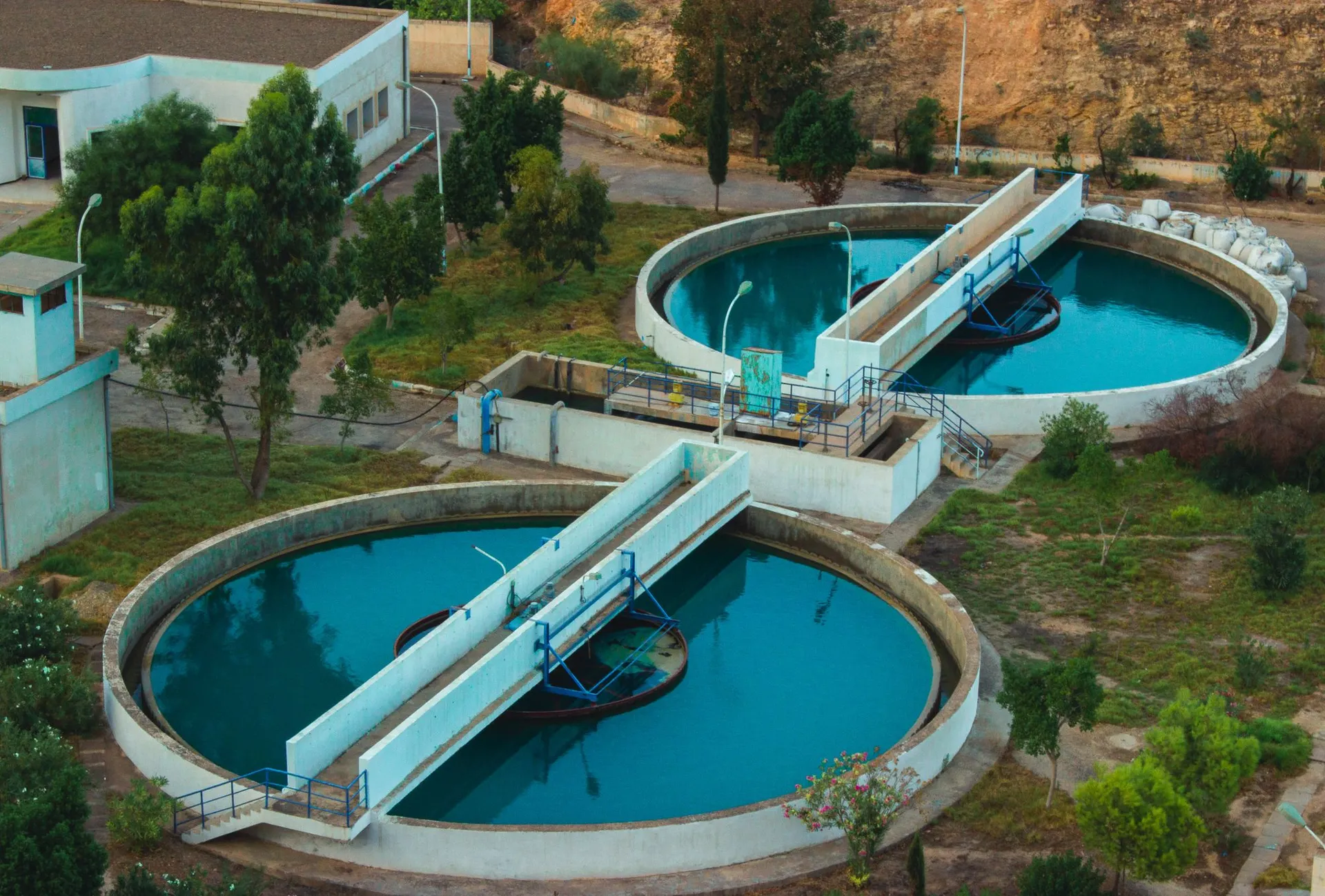
Coagulant and flocculant dosed into clarifiers and thickeners to produce a clear overflow and a thickened underflow. For mineral processing thickeners and settlers this is core to the mining water programme, where thickener performance is throughput.
Filtration support
Where media or membrane filtration follows, correct upstream coagulation protects it. A filter fed properly clarified water runs longer between cleans; a filter fed turbid water blinds.
Sludge dewatering
The same chemistry decides how well a sludge dewaters. A correctly conditioned sludge releases water and reduces in volume; a poorly conditioned one stays wet and expensive to dispose of.
Dosing & monitoring
Polymer make-up and dosing equipment, dosed and controlled, with performance monitored on site and reported. Our engineers sample, dose, monitor, report, and come back.
The problem with a generic flocculant
Why your flocculant works on one stream but not another
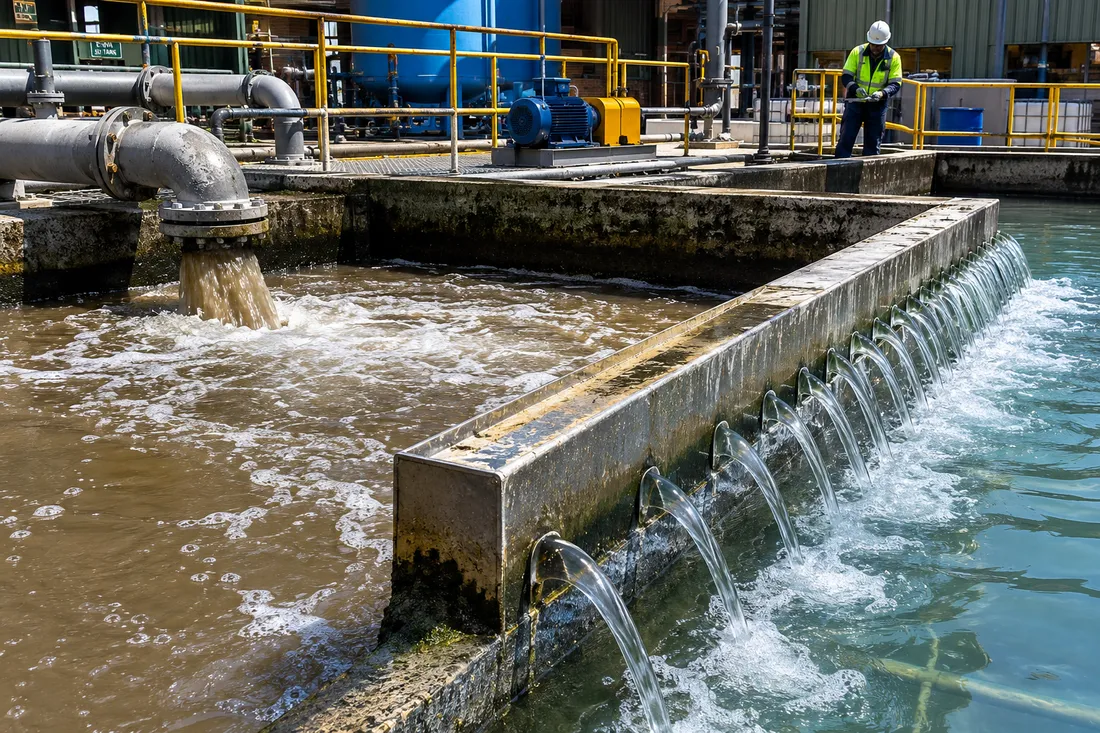
Because the particles differ. Particle size, surface charge and the surrounding water chemistry all change the chemistry that works, so a flocculant matched to one stream can overdose or underdose on another. Each stream needs its own selection — which is what the jar test provides.
Clarification sits at the front of process water treatment and the heart of effluent treatment, and it underpins the thickener and settler circuits in mineral processing. The method — jar test, then programme, then monitoring — follows how we work.
Related
Where this connects
Process water treatment
Clarification at the front of the supply circuit.
Related serviceEffluent treatment
Solids and load removal at the heart of effluent.
Related serviceMining
Thickener and settler performance as throughput.
Sector pageSugar industry
Juice clarification at the front of the process.
Sector pagePotable water treatment
Clarified water taken through to drinking grade.
Related serviceStandards we work to
Where clarification feeds a discharge stream, the programme is designed against your DWS discharge requirements, with written reporting. Where the solids load is better removed mechanically — or is worth recovering — the Baleen self-cleaning filter screens down to microns at full flow. Send us a sample of the water you need clarified, or the sludge you need to dewater, and the jar test tells us what it needs.
- DWS discharge requirements
FAQ
Flocculation & clarification questions
How do you choose the right coagulant and flocculant?
By jar testing the actual water. The correct coagulant charge, flocculant type and dose depend on the specific particles and water chemistry, so Prosep establishes them empirically on a real sample rather than recommending a product off a datasheet. The jar test result is the basis for the dosing programme.
Why does my flocculant work on one stream but not another?
Because the particles differ. Particle size, surface charge and the surrounding water chemistry all change the chemistry that works, so a flocculant matched to one stream can overdose or underdose on another. Each stream needs its own selection, which is what the jar test provides.
Can better flocculation reduce our sludge disposal costs?
Often, yes. The same conditioning chemistry that clarifies the water also determines how well the resulting sludge dewaters. A correctly conditioned sludge releases more water and reduces in volume, which directly cuts the mass and cost going to disposal.
Does this connect to our thickeners and clarifiers, or just dosing?
Both. The programme covers the chemistry and its dosing, and the optimisation of the clarifier or thickener it feeds. In mineral processing in particular, thickener and settler performance is a chemistry problem as much as a mechanical one.
Start with a jar test.
Send us a sample of the water you need clarified, or the sludge you need to dewater, and the jar test tells us what it needs.